
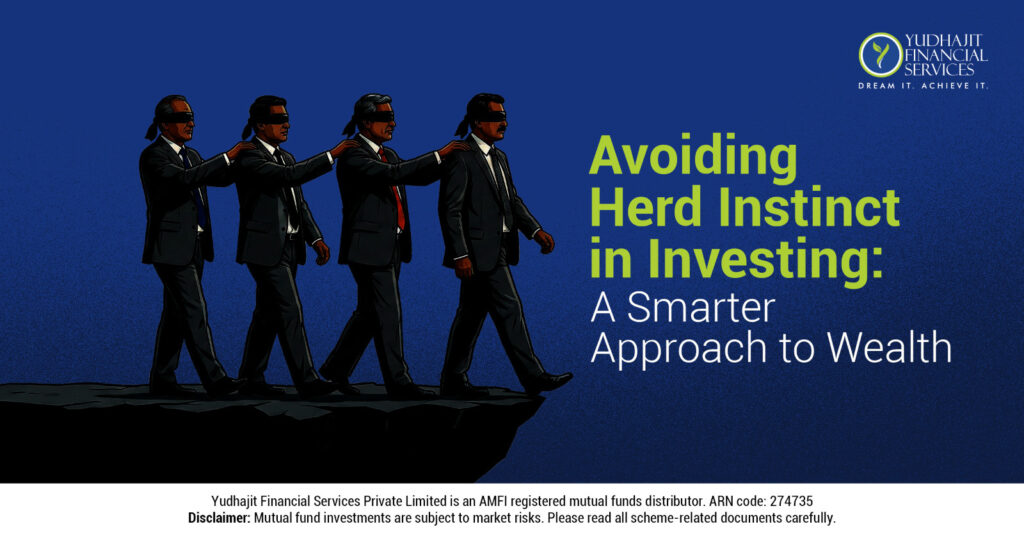
In the world of finance, your biggest challenge is often not the market; it’s your own behaviour. Herd instinct, or the tendency to follow what everyone else is doing, is one of the most common behavioural traps investors fall into.
When you see people rushing to buy a trending stock or exiting the market out of fear, it can feel natural to follow them. But herd behaviour rarely leads to long-term success. It is driven by emotion, not logic.
What is Herd Instinct in Finance?
Herd instinct is the urge to imitate the actions of a larger group. In financial markets, this shows up when investors buy or sell because “everyone else is doing it,” without analysing fundamentals.
How Herd Behaviour Impacts Investment Decisions?
It leads to overvalued assets, panic selling, and poorly timed market entries. Investors often join trends late and exit early, hurting their long-term returns.
Examples of Herd Mentality in Markets
From sudden stock rallies to mass sell-offs, history shows how markets can swing wildly when people act out of fear or excitement instead of strategy.
The Psychology Behind It
Humans fear missing out and dislike standing alone. This emotional bias pushes investors to make decisions without proper research.
How to Avoid Herd Instinct
- Stick to your investment strategy
- Focus on long-term goals instead of short-term noise
- Diversify your portfolio
- Review facts, not trends
- Consult a financial expert before reacting to market movements
Avoiding herd behaviour doesn’t just protect your wealth; it helps you grow it with clarity and confidence.
At YFS, we help you make informed, disciplined, and goal-driven investment decisions, so you build wealth on strategy, not crowd behaviour.