
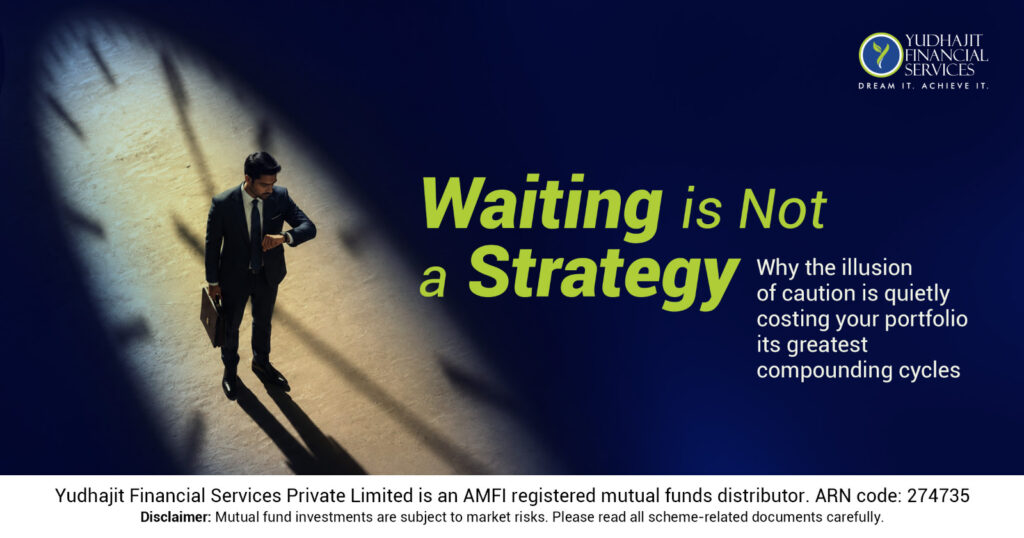
The Waiting Game: How 'Anchoring' Keeps Your Capital on the Sidelines
Many investors believe they are being cautious when they wait for the “right time” to invest. They track prices, compare past levels, and hold back their capital in hopes of entering the market at a better point.
But often, this waiting is not strategy, it’s psychology. This behavior is driven by anchoring bias, where investors fixate on a past price or level.
How Anchoring Affects Investment Decisions
Investors often wait for markets to return to a previous level. Markets don’t move based on your reference points.
The Cost of Waiting
While you wait, opportunities pass by. Long-term growth in equity markets happens over time, not perfect timing. Delaying investments can mean missing compounding and growth cycles.
Market Timing vs Time in the Market
Predicting market timing is difficult. Time in the market is often more powerful than timing the market.
Overcoming Anchoring Bias
- Focus on long-term goals: Short-term market levels can be distracting. When your focus shifts to larger financial goals, retirement, education, wealth creation, temporary price levels matter less.
- Invest systematically: Trying to identify the “perfect” moment often leads to delays. A systematic approach removes hesitation and helps keep your capital working consistently, regardless of market mood.
- Use SIPs: SIPs can help reduce the pressure of timing the market. By investing regularly, you participate across different market levels instead of waiting endlessly for an ideal entry point.
- Avoid emotional decisions: Many anchoring decisions come from fear or regret. Rational investing requires looking ahead, not being tied to past prices. A disciplined process often works better than reacting emotionally.
Anchoring can feel like caution, but often it is simply inaction in disguise.
At YFS, we help investors overcome behavioral biases and build disciplined strategies so your capital stays invested and grows over time.