
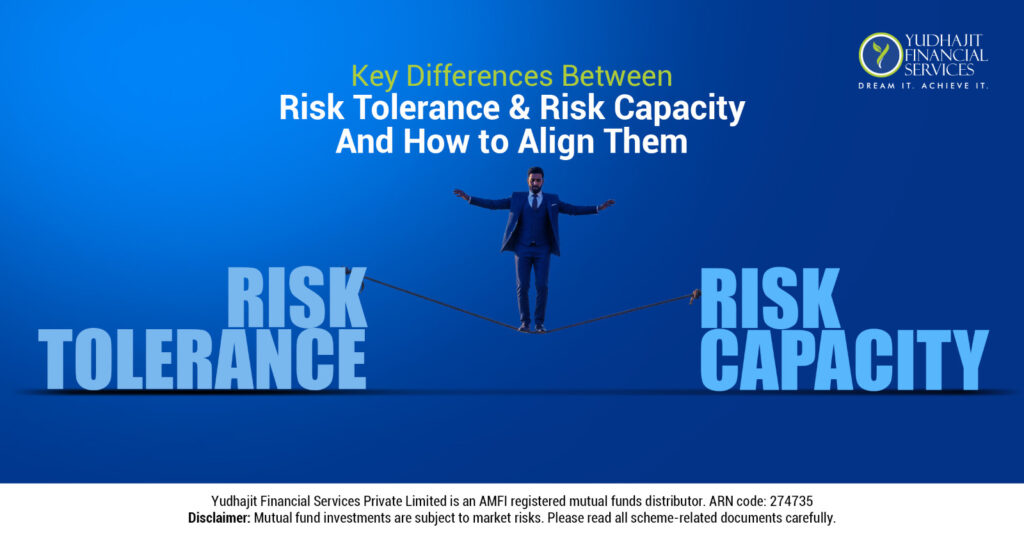
Understanding risk is at the heart of good financial planning. Yet many investors confuse two important concepts: risk tolerance and risk capacity. Although both relate to how you handle uncertainty, they are very different and aligning them can make your investment strategy stronger and more sustainable.
What Is Risk Tolerance?
Risk tolerance refers to your emotional comfort with ups and downs in the markets. It comes from behavioural finance how you feel when your portfolio rises or falls. Some investors are calm during volatility. Others panic. Your tolerance is personal and shaped by your experiences, mindset, and temperament.
What Is Risk Capacity?
Risk capacity is about your ability to financially absorb losses. It’s objective and based on numbers, your age, income, expenses, goals, and time horizon. For example, if you have a stable job, a long time until retirement, and a solid emergency fund, your risk capacity may be higher than someone with short-term goals and uncertain income.
Key Differences at a Glance
- Risk tolerance is about emotion.
- Risk capacity is about financial reality.
- Tolerance can change over time.
- Capacity is anchored in your goals and obligations.
How to Align Them?
- Start with risk profiling
Use structured tools to assess both tolerance and capacity separately.
- Build an emergency fund first
A solid safety net increases your risk capacity and reduces stress during market swings.
- Match strategy to goals
Long-term goals can accommodate more risk; short-term goals need safety.
- Review regularly.
Life changes, promotions, family needs, or market shifts, can affect both tolerance and capacity.
A great investment strategy isn’t just about picking assets. It’s about knowing how much risk you can take and how much you should take. At YFS, we help you invest according to your goals and true risk capacity, not market noise.